What does bushcraft and wilder camping mean to me? Well, apart from its practical application and the fact that I think it’s just good fun. For me, I get a deeper sense of meaning from it. Especially when spending nights alone in the wild with little and basic equipment. Meaning that I desperately need in this confusing world where everything is now coming under question. I believe, it’s about getting rid of the fluff and peeling away the layers of useless, material baggage of the modern world and condensing down what you actually need in life to some basic tools and priorities.
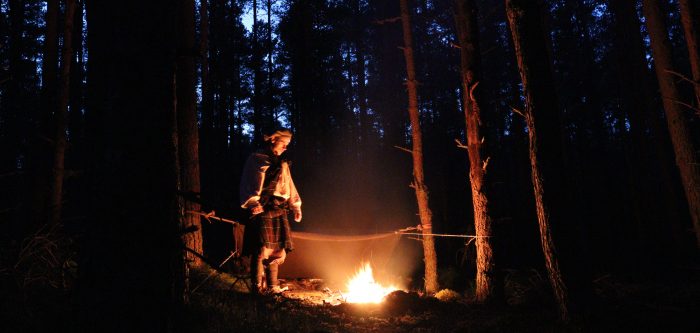
If you think about it: the human mind and physiology has been moulded by hundreds of thousands of years of hunter gatherer evolution. Well over 90% of our existence on this planet. Therefore, practicing these skills connects me with what I can only describe as the primal fundamental human reality. Like a memory of something that I have never seen. Like acting out distant knowledge encoded in our very DNA. In the woods I feel whole and I feel human.
In many hunter gatherer societies, boys were initiated into manhood by being banished alone into the wilderness to fend for themselves. To allow the “boy ego” to die and for them to return a man. Perhaps this is the origins of what Joseph Campell described as the “Hero’s Journey”. A story represented in myths throughout cultures and ages all around the world. I see the solo journey into the wild as a metaphor for life and an exercise to better understand ourselves.
The wilderness represents chaos. When the walls of your reality break down and the comfort of order disintegrates. You are alone with your thoughts, there is no one else to rely on and your only companion is a few basic tools in your backpack. Then like King Arthur’s knights, you must willingly enter the part of the forest that seems darkest to you and confront the shadows that are awaiting in the abyss.
But your mission is clear. You must setup or build a shelter to maintain your core body temperature and establish a microclimate of order. Create fire -man’s greatest companion- to provide the energy potential to make water safe to drink, food more nutritious, manipulate resources in your environment to make tools and banish the beasts of the darkness. With each of these challenges overcome you plant a seed of order in the chaos. You find new appreciation for the simple things in life and become grateful for what little you may have.
But in synchrony with the chaos of the wild, there is also space, harmony and a stillness. Sensations that we are we so deprived of in modern life. Free from distractions, your evening entertainment is the crackling fire accompanied by the forest symphony. Its a chance to reclaim your attention and be alone with your thoughts and see what your thoughts actually are. Content with the primal attraction of staring into the flames of your camp fire, you commune with the ancestors. The passage of time seems less rigid and less relevant.
Its a chance to observe the way of the forest; many life forms performing a slow, cyclic dance of life and death; struggling for survival yet effortlessly being; competing yet cooperating simultaneously.
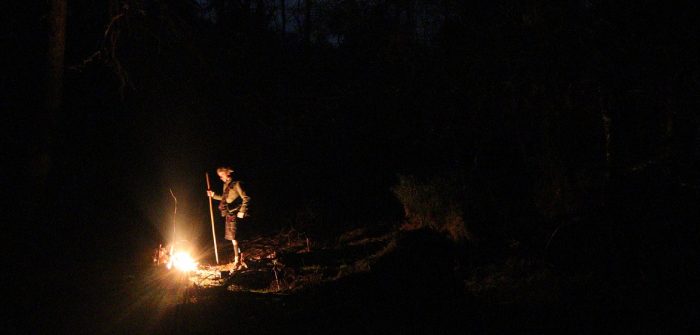
In the abyss of the wilderness, perhaps something inside of you may die and something new will be reborn. On returning to the known world, many things may not seem so scary any more. You have a whole new appreciation for the simple things in life: The joy of clean running water; the wonder of a hot shower; the cosy security of a solid shelter and the marvel at the easily available food from all around the world and the indescribable contentment of sharing a meal in the company of loved ones. The experience is a reminder of what is actually important and can be used as an everyday meditation of gratitude. A useful tool I have found to get me through the harder days in life.
Despite our need to create habitable order from the chaos of nature; I don’t believe that nature is something that we must battle and subdue. Nor separate ourselves from and contain as ornaments of purity, only to admire from a distance, never to be touched. For you cannot separate the organism from the environment and what you do to one you do to the other.
For as Chief Seattle said “Man did not weave the web of life-he is merely a strand in it”. Therefore, I believe we must relearn how to be active, responsible participants in the natural world. We must not suppress, but integrate our wild nature, immerses ourselves in the wilderness and be aware what we have evolved to be.
The forest is the site of the rite of passage and without the woods, we humans are stuck in a hall of mirrors, bound to reflect only our man-made world and ideas.
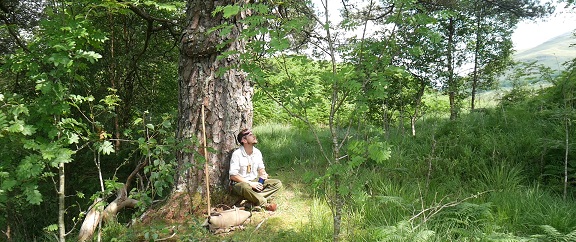
I think wildness is essential to human wellbeing and as John Muir once said “Thousands of tired, nerveshaken, over-civilized people are beginning to find out that going to the mountains is going home; that wildness is a necessity“.
I feel like we can all benefit by reconnecting to our wild origins and experience feeling human again.
– adapted from a video transcript by Tom Langhorne – YouTube channel ‘Fandabi Dozi’
https://www.youtube.com/fandabidozi
Brrrr it’s cold, snowing even. I need a hot bowl of something from the campfire.
With winter cooking outdoors -people comfort- should come first. We want a lively fire radiating
good heat, once cosy we can then start cooking and adapt our dish to the fire. We will use the fire’s
radiant heat to cook a giant Lamb Tikka Kebab and to accompany it a warming pan cooked Winter
Vegetable Curry.

Fragrant Paste
1 whole bulb (8 cloves) Garlic
25g Ginger root
25g White onion
25g coriander stalk
4 Green chillies
1 tsp coriander seeds
1 tsp cumin seeds
2 tsp mustard seeds
1 tsp fengugreek seeds
5 green cardamon pods
Main
1 bunch coriander leaf
600g Scottish lamb (leg meat, generous chunks)
3 parsnips
½ swede
200g spinach leaf
200g baby plum tomatoes
1 pint (loch) water
100g butter
Slosh rape seed oil
½ tsp Salt (to taste)
(Yellow Sauce
2 Lemon Juiced
1 tbsp demerara sugar
2 tbsp rape seed oil
½ tsp turmeric)

I pre-marinated the lamb so all that needs doing is threading on the skewer and positioning it to
cook near the fire.
For the fragrant curry paste blitz equal quantities of garlic, ginger, onion, coriander stalk and 4 thin
green chillies (moderate heat, tweak to preference). Toast the spices gently for 4 minutes to release
the oils and create that nutty aroma, grind and add to the mix*
For the lamb tikka marinade- and add to a bowl with the lamb, lemon zest, yoghurt and half the
fragrant paste. Season with salt, mix and leave. If your trekking in carry it in a picnic box with tight
lid, then with every bouncing stride smile at the thought of your lunch getting a free marinade
massage!
* alternatively a couple of spoons of store bought curry paste would suffice.

Balance the loaded skewer across the fire pit rocks. As we are cooking indirect, using the roasting
heat of the fire, I have gone larger on the lamb chunk size. For portability I have chosen to cook this
on a long skewer. A folding grill would also do, we just need to get the lamb positioned about one
foot away from the fire for its indirect roast.
For the curry lets start by adding rape seed oil to a hot pan, then melt the butter and add the chopped
onions and the remaining fragrant paste. Gently cook the onions and paste till browned. My pan is
carbon steel and great for searing however direct on the embers would be too much so I have raised
it with rock and branch. Chop the swede and parsnips to rustic proportion then add to the frying
aromatic paste. Stir occasionally, then add a wee splash of loch water, topping up again as the pan cooks dry. When the vegetables start to soften add the box of plum tomatoes and let them join the
bubbling mix, they will soften and pop imparting further to the sauce.
Place the shallots unpeeled into the embers- the embered vegetable is a thing of delight, slow
cooking direct in the embers imparts a lovely smokey flavour and we simply remove the burnt
outside when its done.
Keep the fire lively, stay warm. Occasionally moving to turn a shallot, reposition the kebab or stir
the curry, I take in the surrounding winter wilderness and its stark contrast to the magic of the fire
before me. Let’s talk about fire another time, for now- back to the feast.
Once the vegetables are soft to the blade. Add a good pile of the fresh spinach and stir into the sauce
until all leaves have soften. Season with salt, taste and re-season if need be. We are ready…

I wanted to do something special for the good folk of Nearly Wild Camping as their cause has
struck a personal note with my growing up stealth camping, so let’s plate up with some love.
First a generous line the vegetable curry across the plate, next the lamb tikka chunks crossing the
curry, nestle to the side of this glorious intersection a generous dollop of yoghurt. Garnish the plate
with the embered shallots, an accidental scattering of coriander leaves, and finally an optional
shallot centric drizzle of my yellow sauce.
The savoury spiced lamb is a delight, sitting beautifully with the warming fragrant curry, contrasted with yoghurt tang and herbs… and those sweet-sweet embered shallots? well they are always welcome at the flavour party.
Have a good meal,
Peter Roobol,
Founder,
FireChef Cookware – Outdoor Cooking Equipment for Campfires and Fire Pits
Steve was recently interviewed on The Outdoors Station podcast:
Note the preparedness rule ‘3=2=1’ … if you have 3 ways to light the stove and one doesn’t work, you still have 2 and if another method doesn’t work you still have 1 eg. matches, lighter, ferro rod.
The same applies to say light – torch, head torch, keyring torch – all could fail due to battery life.
You don’t need to apply this rule to things that rarely fail or could be repaired in the field eg. footwear – but packing some duct tape and some cordage could save the day if your boot starts to fall apart and they have many other uses too.
Conclusion: Overall you are looking to be self-sufficient and will probably need to modify what you take on a wild camp depending on the time of year and the location eg. warmer sleeping bag in winter months or at high altitude. You should also have knowledge of how to deal with not having toilet facilities when you wild camp 😉

All of the UK is owned by someone or some organisation. Wild camping does happen but is often not possible or realistic for many people hence the reason for creating Nearly Wild Camping.
Nearly Wild Camping has been working hard to help people access wilder camping opportunities for some time, whilst also ensuring some benefit to the landowners. We are not aiming to replace or challenge wild camping, we are here to make wilder camping more accessible whilst giving real benefit to both campers and landowners.
Nearly Wild Camping (www.nearlywildcamping.org) has been running for some years, has almost 1000 members and 65 locations already. We are a corporate partner of the National Association for AONBs and we have recently been granted Welsh Government camping exemption certificate for locations (we are still waiting to hear about our England licence, though hope to hear soon).

By setting up a wild camping organisation of which both campers and landowners are members, we have started to establish a real community of campers and locations. It is important to us to offer a range of wilder experiences, including importantly locations which help people learn and develop their skills. And, if we are really able to help people re-connect with nature and the countryside it’s important that we can have locations which are close to the urban areas where so many of us live.
We have worked hard to keep our prices low to make sure that affordability isn’t a barrier and we know from feedback that it works. However, we also know that the income that the landowners get matters, helping them to find the money they need to manage their land. We have spoken with some of ourlandowners about considering a small payback to local wildlife and landscape organisations to help with their work, but we do not demand it. We would of course be happy to pilot other ways of doing this and have done some trials of our own already.
Our booking system is not online, but direct to the landowner. This is deliberate and based on our experience of working with both online and direct booking methods. We have found that the ‘good old human relationship’ ensure our members get the best service, helping campers connect with the landowner and learn about the countryside more directly through them.
We decided to be a club (it’s easy to join, and only £20 per year so it should not exclude anyone on price!) to help give landowners confidence, and to provide a framework for us to build a network and community for people to join, where they can learn about and enjoy responsible camping either as a camper or a landowning provider – and some are both.

Working with the John Muir Award programme, we are developing camping guidance and we are soon to launch social weekends with a learning aim, focussing on low impact, leave no trace, give something back camping. These will develop camper skills, build social networks and enable attendees to access to some of our more sensitive camp locations.
We are very proud of what our small team have achieved so far, mainly through voluntary efforts and with only a small initial external set-up grant (from a Powys LEADER programme). We are now a self financing success story and we aim to now build up what we offer.
We are proud of our Welsh roots and very pleased that Wales has been the first country to grant us the camping exemption certificate. We believe this is an important part of building a greener economy in Wales and fits with important Welsh Government agendas. We have 5 years’ practical experience of working with campers and landowners and have a huge amount of knowledge to share. We are now starting to blog, vlog and share this, based on real experience. In addition, our founders have now also launched Nearly Wild (www.nearlywild.org), a community interest company, to help other types of nature-based business and the people seeking to buy nature-based products and services.
We have lots more plans in the pipeline, so please do help support us, get involved or become a Nearly Wild camper or camping location.
The Nearly Wild Camping team.
1) Watch – mobile phones lose charge, aren’t very waterproof and damage easily so keep a cheap digital watch to hand. Check it’s set to the correct time before your camping trip.
2) Salt – you only need a small amount. Useful for adding to food and replacing that lost through sweat. You can go a couple of days without but on longer camps you will start to miss it.
3) Duct tape – you don’t need a full roll, you can just wrap a few meters around a pen or similar object. Has many uses for fabric/pole repairs.
4) Spare torch & batteries. It’s easy to misplace your main torch or run the batteries flat which is no fun in the middle of the night. A mini backup torch kept within easy reach of your sleeping bag is useful to quickly get your bearings should something awake you in the night.
5) Expanding cloth tabs/coins – taking up only a tiny space, just add water for a useful all-purpose cloth/wet wipe/towel/hand cleaner/spill wiper….
6) Water purification tablets – if in doubt pop one of these in your drinking water, it may just prevent an upset stomach and many trips to the toilet!
7) First aid kit – no camp should be without one. Check it contains the things that you think you may need – common items like plasters, anti-septic wipes and paracetamol may need topping up.
8) Scouring sponge. Just what you need for those stubborn campfire/BBQ cooking marks on pans and grills. Also useful for sponging up spills and tent leaks/condensation.
9) Notebook & pen. In a different environment you never know what strange thoughts will emerge – just had a great business idea? – write it down. Finally worked out how to fold away that pop-up tent – write it down. Need help lighting the campfire – tear out a couple of blank pages…
10) Whistle – you may never need to use it for yourself but it’s also great way to attract attention for others too. eg if you find a mountain biker who has broke his ankle in a woodland and can’t walk out.

Attentional restoration theory (ART) first proposed by Kaplan and Kaplan (1989) claims that urban environments suffer from an excess of stimulation that serves to dramatically capture our attention. People exposed to urban environments are forced to use their attention to overcome the effects of constant stimulation (described as hard fascination), and over time this in turn induces cognitive fatigue. In contrast, natural environments benefit from what the Kaplan’s term soft fascination, which refers to scene content that automatically captures attention while simultaneously evoking a sense of wellbeing. Generally speaking, natural settings do not pull at your attention relentlessly, forcing you to make decision after decision. Instead, they inspire quiet observation, appreciation and relaxation.

‘The natural world is often depicted as a restorative environment that replenishes one’s resources, while busy, crowded urban environments have often been considered attention and energy drains. Although these beliefs were long held as simply opinions and personal views, the last few decades have seen some empirical work on the idea that natural environments can restore and rejuvenate us, boost our attention, and keep us healthier.’ – Positive Psychology Program
‘When the demands of daily life get to be a little much sometimes all it takes is a brisk walk outside to simmer down and release some excess tension. The smell of fresh air and the subtle sounds of nature have the unique ability to cleanse our thoughts and help us escape. With more research into our connection with nature, science is always there to remind us that not only is spending time in nature a perfect way to unwind but is also an essential component to our mental health.’ – MindBody Vortex
It is obvious then that camping in a wilder, more natural location is the perfect way to invoke attentional restoration. People quite often are aware of the positive feeling of ‘escaping’ into nature without being able to express it in words. Camping also allows us to leave the clutter of things we surround ourselves with behind, thus removing distractions that can also cause stress. As humans we do have the ability to adapt and evolve but nowhere near as quickly as the rate of change that has happened in the last few thousand years with the development of cities, man-made materials and the infrastructure built from them.
In conclusion regular wilder camping trips – even for only a single night away – will help to keep the mind, body and spirit in balance and you may just have some fun too!
There are many types of tent pegs available but which should you use and why?
When choosing suitable tent pegs you should take into account the weight, shape, size, material and the intended use. Some pegs are designed for different terrains and weather. It’s always good to have a few spares to hand in case of unexpected conditions. Many campers upgrade some (or all) of the pegs that come as standard with their new tent. Make sure you angle your pegs away from your tent to maximise their ability withstand tension. One thing to note is that you don’t want to use too strong a peg that the guy line rips away from the tent in a gust of wind – better to have the peg come loose and be able to ‘reset’ it.
A) Small round steel pegs. These often come as standard with entry level tents, while they are fine for pegging out ground sheets and the base of your tent they are not really suitable for the main guy lines as they can easily turn and release the guy line or pull out of the ground in the slightest breeze. If you have to use these for guy lines you can use them in twos to form an ‘X’ facing the tent.
B) Commonly known as ‘rock’ pegs, these heavy metal pegs are designed to be hammered into firm ground where stones may be present. They tend to be used with larger tents where weight is not the main consideration.
C) ‘V’ shaped galvanised steel pegs have a good surface area allowing them to hold a lot of guy line tension, these make a good upgrade for the main guys if your tent only came with small round steel pegs. They work well in soft ground.
D) ‘Y’ shaped pegs/stakes are popular with higher spec. backpacking tents as they are usually made from aluminium or titanium to minimise weight, there shape enables them to take a fair amount of tension for their size. A good all rounder for smaller tents.
E) Brightly coloured plastic pegs are long lasting durable pegs that are easier to see than other types, are fairly lightweight and they will not rust. Not suitable for very firm or rocky ground
F) Long round steel pegs are an ideal upgrade for main guy line use or to bolster the side of the tent receiving the most wind. Filing the end to a point will make them easier to get into the ground.
G) Lightweight aluminium pegs are useful where weight is an issue, they tend to be of greater diameter than their steel equivalent but they will still bend. Lower in price than ‘Y’ shaped pegs and not as versatile.
We’ve all seen such signs which imply that we will get into trouble if we venture on to a piece of land but what does it really mean? Is it ok to wild camp on a bit of land that doesn’t appear to be used for crops or livestock?
‘The laws of England, Wales and Northern Ireland give landowners the right to exclude us from their land, except for a small fraction consisting of public rights of way and even here we enjoy an entitlement only of passage. The right of exclusion applies equally to forests and mountains, fields and riverbanks, cliffs, quarries and heaths, a 1000 acre parkland or 10 acre meadow. It is enshrined in laws of trespass which provide that if you set foot on British soil you are breaking the law unless the owner of that land has given you permission to be present. These laws entitle a landowner to use ‘reasonable force’ to eject you if you decline a request to leave. In deterring or ejecting trespassers there are of course limits on what a landowner or somebody acting on his behalf can do. If he uses a considerable amount of force the trespasser may sue him for assault; threatening behaviour such as waving a shotgun at a trespasser can be classed as assault since you do not need to touch somebody to be guilty of this offence but merely to instil in them the fear that they may be physically hurt…If he can demonstrate that the trespass has resulted in financial loss to him then a claim for damages will usually be successful’ – A Right to Roam (Marion Shoard).
So to be on the right side of the law you need to seek the landowners permission and in Britain ALL land is classed as privately owned. Although wild camping is tolerated on moorland and mountains in places like The Lake District you can still be prosecuted if you cause any damage, even if that damage is not intentional and may be asked to move on by rangers or landowners at any time.


Motivation – you’ve got to want to do it in the first place!
Planning & Preparation – check the weather forecast, plan your meals & snacks, pack your bag in the order you will need things (or use different pockets). Knowledge of the landscape (map).
Practice & Testing – learn to put your tent up in the dark/low light and pack away in an organised manner.
Knowledge of Equipment – understand your kit (Practice & testing), you may need backups such as an extra torch and more than one way to light your stove.
Self-discipline – keep your camp and equipment organised or you will keep losing things.
Problem solving – you need the ability to adapt to unexpected changes and failures (Spares & Repairs)
Self-sufficiency – if you are on your own you want to check you have everything you need with you including a first aid kit (Planning & Preparation)
Spares & Repairs – take some basic tools and bits’n’bobs to make field repairs eg. fabric tears, pole break, broken sleeping bag zip etc.
Leave no trace – pack everything out, double check you have left nothing behind.
All of the above lead to Confidence in your ability and equipment but if that all seems a bit daunting start by spending regular times in a wilder place and observing the sights, smells and sounds until it all starts to feel familiar. Then try camping with a friend and finally spend a night out on your own.
Fear – the only way to conquer it is to face it, once you get past the fact that wilder places aren’t full of bogeymen, ghosts and zombies you will get great enjoyment (and other benefits) from time spent in nature.
Looking for further reading, try https://namastenourished.com/growth-mindset/