There are many types of sleeping mat available, as with most camping equipment there are a variety of price points and a plethora of weight/sizes on the market.
What is the purpose of a sleeping mat? The mat provides insulation between you and the ground and therefore helps you to keep you warm, but let’s not forget it helps to provide a comfortable nights’ sleep too . With most of us sleeping on thick sprung mattresses with memory foam toppers at home it can be quite a different experience to spend the night on only a few centimetres of sleeping mat.
Different types of sleeping mat:
1) The entry level foam sleeping mat is usually only 1-1.5cm thick and rolls up into a rather bulky but lightweight addition to your camping kit, often attached to the outside of a back pack for carrying. These are low in price and won’t deflate during the night, some have a foil coated reflective side.
2) Next is the popular self-inflating sleeping mat which is usually 2-4cm thick with some internal structure that causes it to inflate when the valve is opened. These are bit less bulky but can be quite heavy.
3) A popular sleeping mat used by hikers is made from lightweight materials, inflated by blowing into a valve and can be quite thick due to being made up of a number of shaped chambers, which can resemble a sun lounger lilo. They pack very small but take a bit of effort to inflate, the lightweight material could puncture quite easily – for this reason they normally come with a small repair kit. For the ultimate in lightweight and small pack size you can get shaped 3/4 size mats or ‘skeleton’ designs but the trade-off is that they can be less comfortable and not as insulating. This type of sleeping mat is the least bulky.

4) Moving towards the high-end of sleeping mats there are those that have down insulation inside them. Utilising thinner and lighter materials they offer more comfort while not really increasing the deflated size. As they can require more air volume to inflate some come with mini-pumps or drybag-style ‘pump bags’.
5) You may think we have missed a popular type of sleeping mat but this type is in the category of ‘air-bed’ – bulky, heavy, arduous to inflate without an electric pump and resembles the shape of a regular mattress. Not really suited to wild camping but ok for less wild locations where your car maybe nearby or you have access to electricity or a power pack.
It’s interesting to note that some people use a combination of the above, especially in colder weather or for added comfort.
eg. Foam mat (1) with (4) placed on top improves overall insulation and helps prevent punctures from sharp objects on the ground, if (4) was to deflate for any reason (1) will still provide a level of insulation between the sleeper and the ground.
The home of modern Volkswagen campervan hire in Manchester. The family of VW T6 Transporters is waiting to whisk you away…
Whether it’s a holiday with the kids, a weekend in the Lake District, or you want to do a festival in style, the campervans are set up ready to go with everything you need for your adventure.

Established in 2012, Nick started Manchester Camper Hire to share his first campervan. As the family of vans has grown, Manchester Camper Hire has retained the same personal and friendly service. Just call at any time to speak to Nick to find out more about the campervans or to book your next campervan holiday.
Nick: 0161 370 4206 www.manchestercamperhire.co.uk
After many months of being stuck inside our homes and restricted from non-essential traveling, we are now finally allowed to step into the great outdoors once again. Clean out your old pans and grab your hiking boots, it’s time to pitch up and take a moment to appreciate the bliss feeling of freedom.

There are a few things that we’ve deeply missed when it comes to the thought of camping once again – The hypnotic flames dancing in a campfire, the sound of nature’s alarm clock waking up around us, and the sweet, sweet smell of freshly brewed coffee first thing in the morning. Now that we’re feeling that extra appreciation, let’s talk about how we can really transform that morning coffee into something memorable that will boost your mood throughout the day.
First up, let’s talk about equipment. You don’t need anything fancy to make an amazing cup of coffee, an Aeropress or a Moka pot are perfect for camping but are commonly used at home, due to the quality of coffee they produce.

Moka Pot
A Moka Pot coffee, sometimes known as a stovetop coffee is the perfect portable way to make a delicious, espresso-style coffee and all you will need is a portable gas burner. Here’s how to prepare a perfect stovetop coffee (safely) whilst you’re in the wild.
The trick? Avoid overheating and pour straight away so your coffee doesn’t come out stewed.
The best coffee for a Moka is a fine blended strong and dark roast. If space in your pack is at a premium you can easily find a single cup Moka pot which weighs virtually nothing.

Image credit: bikepackaging.com
Aeropress
An Aeropress is perfect for camping as its lightweight and doesn’t take up too much room, plus it’s very simple to use. In recent years there have been world championship recipes brewed with an Aeropress that are so simply to do, you can do them whilst camping. Try the below method:
You should now have a fresh cup of coffee which you can dilute with hot water to get your preferred strength and taste. The smell alone from a freshly brewed coffee is enough to wake you up and give you that boost to tackle the day ahead. Take a deep breath in and savour the moment. BONUS TIP – Brew extra coffee and take it with you in a flask, this sensational moment doesn’t have to be over just yet.

Author: Rave Coffee
“Quality beans. No jargon. No BS. Great coffee made simple”.
There are few things more satisfying to me then the sound of rain on our campervan roof, or the
way the dawn light spills in first thing in the morning, coaxing you out of sleep and calling you to face
the day ahead. There’s also watching the stars dot the night sky from the open window as I lay in
bed. For me campervanning soothes my soul.
Not the type of campervanning where you pitch up on big, sprawling campsites and find yourself
stuck in a sea of others – no, there is nothing soul soothing about that at all. In fact, the idea of that
fills me with dread, I like to be out in the middle of nowhere, where it’s quiet save for the crackle of
corvids over-head, or the gentle lapping of water on stones.

A lot of people think you kind find wildness on a campsite, but there are plenty of wilder sites that
offer you a chance to reconnect with nature. The sites with limited facilities, no lights, the option to
have a campfire should you wish and probably most importantly no Wi-Fi are fantastic ways to
reconnect with nature.
In fact, some of our wildest adventures have been on campsites. Small, five van sites, or a farmer’s
field where they have let us squirrel ourselves away in a quiet corner. Here we have sat with the
doors wide open, the crackle of a campfire sending smoke signals up into the settling dusk as bats
whirl over head and owls hoot from the tree line.

My favourite and most definitely wildest experiences were in a camping field in Arisaig that sat
perched above a white sand beach. Each morning we would submerge ourselves in the icy, turquoise
waters of the sea and swim until our teeth chattered and our fingers turned blue. We would warm
them on hot coffee with our toes in the sand and watch as seals swam past on their way out to the
ocean. When we could, we would sleep with the back doors open and let in that special Scottish half
light of the summer, with far off islands sketched on the horizon.

We may be in a campervan and not in a tent, but we have still felt the wild. We have let in creep in
around our edges and cement its way into our everyday lives. Staying in a van teaches you to look
for the wild in every day, whether that’s the sunrise, or listening for the songs of birds that drip
down from the trees.

Our van life has encouraged us to disconnect from many modern appliances and reconnect with
nature. We try to live as simple life as we can, we try not to fill it with things and gadgets and instead
to look out for and appreciate the slower simpler things. A good book with only the birds for back-
ground noise, the first stars of the evening, the gentle pitter-patter of rain our campervan roof.
– guest blog by Jeni Bell
Renting a camping tent online has been made so much easier with the Olpro Loan & Go service. Simply choose a tent you need and add to cart with one click. With Loan & Go you can select from a range of tents and awnings that you can borrow from Olpro. If you don’t camp often, this is a great way to hire the tent you need and save money. This takes away the need to buy a new tent each year as your circumstances change. Select a tent based on size, style and berth – we’ve got so many options. Tent can be borrowed for 3 or 7 days. Get in touch with Olpro if you need to borrow one for a longer period of time.
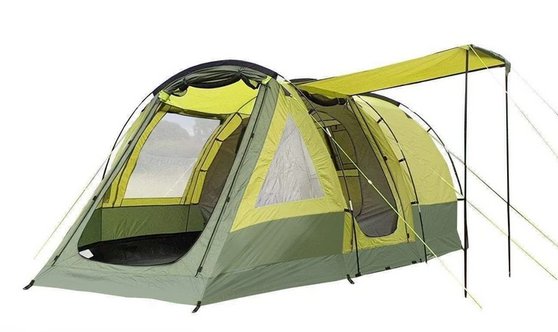
When you rent a camping tent from OLPRO, you can rest assured that you are getting great quality equipment.
Hire a Poled Tent
All our poled tents come with plenty of ventilation and fly screens on all doors and windows. What’s more, they’re easy to set up and they come with an oversized bag, so you won’t struggle getting it back in. Tents are available for hire at bargain prices in a multitude of sizes – choose any size from a small pop-up tent to an 8-berth family tent. Whichever poled tent you need, you’ll find exactly what you want for your camping trip at OLPRO.
Hire an Inflatable Tent
If you’re looking to hire an inflatable tent – look no further. You will find that inflatable tents are easier to pitch when compared to traditional tents – which makes them perfect for beginner campers. Even when inflating multiple air beams, it is still guaranteed to be much faster than poled tents. If you’re new to camping, we recommend alleviating some of the camping stress by renting a high quality, durable inflatable tent.
Hire an Awning Extension
Looking to get a bit of extra room for your next camping trip? We fully recommend hiring one of our spacious campervan awnings for the weekend. We are established manufacturers of quality outdoor leisure products, so you can rest assured that you’re getting the best quality campervan equipment online.

Prices include the delivery fee and the return fee. To return the tent after you have borrowed it, simply attach the returns label we provide and bring it to your local post office. We offer a multitude of tents in different sizes, shapes, and colours so we are sure that you’ll find exactly what you need for your camping holiday.
Contact Olpro on +44 129 989 6959 or email sales@olpro.co.uk if you need help with renting a camping tent online.
https://www.olproshop.com/collections/olpro-loan-go
In this video, Nearly Wild Camping’s founder, Steve Evison, shares a few thoughts on tents he and his family have found work well for Nearly Wild Camping.
Steve has camped in many situations from extreme Himalayan mountain environments to wild Alaskan forests, commercial campsites to roadside verges! In this video, he shares some thoughts on some of the types of tents he has used for Nearly Wild type camping and why.
What does bushcraft and wilder camping mean to me? Well, apart from its practical application and the fact that I think it’s just good fun. For me, I get a deeper sense of meaning from it. Especially when spending nights alone in the wild with little and basic equipment. Meaning that I desperately need in this confusing world where everything is now coming under question. I believe, it’s about getting rid of the fluff and peeling away the layers of useless, material baggage of the modern world and condensing down what you actually need in life to some basic tools and priorities.
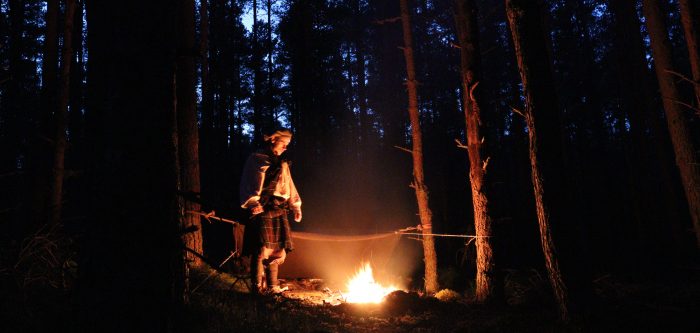
If you think about it: the human mind and physiology has been moulded by hundreds of thousands of years of hunter gatherer evolution. Well over 90% of our existence on this planet. Therefore, practicing these skills connects me with what I can only describe as the primal fundamental human reality. Like a memory of something that I have never seen. Like acting out distant knowledge encoded in our very DNA. In the woods I feel whole and I feel human.
In many hunter gatherer societies, boys were initiated into manhood by being banished alone into the wilderness to fend for themselves. To allow the “boy ego” to die and for them to return a man. Perhaps this is the origins of what Joseph Campell described as the “Hero’s Journey”. A story represented in myths throughout cultures and ages all around the world. I see the solo journey into the wild as a metaphor for life and an exercise to better understand ourselves.
The wilderness represents chaos. When the walls of your reality break down and the comfort of order disintegrates. You are alone with your thoughts, there is no one else to rely on and your only companion is a few basic tools in your backpack. Then like King Arthur’s knights, you must willingly enter the part of the forest that seems darkest to you and confront the shadows that are awaiting in the abyss.
But your mission is clear. You must setup or build a shelter to maintain your core body temperature and establish a microclimate of order. Create fire -man’s greatest companion- to provide the energy potential to make water safe to drink, food more nutritious, manipulate resources in your environment to make tools and banish the beasts of the darkness. With each of these challenges overcome you plant a seed of order in the chaos. You find new appreciation for the simple things in life and become grateful for what little you may have.
But in synchrony with the chaos of the wild, there is also space, harmony and a stillness. Sensations that we are we so deprived of in modern life. Free from distractions, your evening entertainment is the crackling fire accompanied by the forest symphony. Its a chance to reclaim your attention and be alone with your thoughts and see what your thoughts actually are. Content with the primal attraction of staring into the flames of your camp fire, you commune with the ancestors. The passage of time seems less rigid and less relevant.
Its a chance to observe the way of the forest; many life forms performing a slow, cyclic dance of life and death; struggling for survival yet effortlessly being; competing yet cooperating simultaneously.
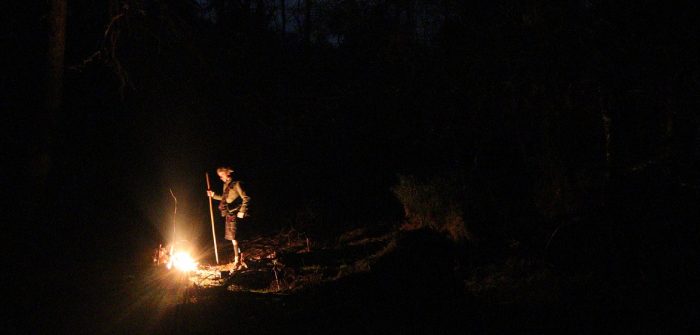
In the abyss of the wilderness, perhaps something inside of you may die and something new will be reborn. On returning to the known world, many things may not seem so scary any more. You have a whole new appreciation for the simple things in life: The joy of clean running water; the wonder of a hot shower; the cosy security of a solid shelter and the marvel at the easily available food from all around the world and the indescribable contentment of sharing a meal in the company of loved ones. The experience is a reminder of what is actually important and can be used as an everyday meditation of gratitude. A useful tool I have found to get me through the harder days in life.
Despite our need to create habitable order from the chaos of nature; I don’t believe that nature is something that we must battle and subdue. Nor separate ourselves from and contain as ornaments of purity, only to admire from a distance, never to be touched. For you cannot separate the organism from the environment and what you do to one you do to the other.
For as Chief Seattle said “Man did not weave the web of life-he is merely a strand in it”. Therefore, I believe we must relearn how to be active, responsible participants in the natural world. We must not suppress, but integrate our wild nature, immerses ourselves in the wilderness and be aware what we have evolved to be.
The forest is the site of the rite of passage and without the woods, we humans are stuck in a hall of mirrors, bound to reflect only our man-made world and ideas.
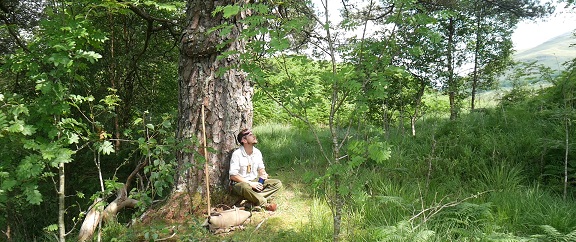
I think wildness is essential to human wellbeing and as John Muir once said “Thousands of tired, nerveshaken, over-civilized people are beginning to find out that going to the mountains is going home; that wildness is a necessity“.
I feel like we can all benefit by reconnecting to our wild origins and experience feeling human again.
– adapted from a video transcript by Tom Langhorne – YouTube channel ‘Fandabi Dozi’
https://www.youtube.com/fandabidozi
Brrrr it’s cold, snowing even. I need a hot bowl of something from the campfire.
With winter cooking outdoors -people comfort- should come first. We want a lively fire radiating
good heat, once cosy we can then start cooking and adapt our dish to the fire. We will use the fire’s
radiant heat to cook a giant Lamb Tikka Kebab and to accompany it a warming pan cooked Winter
Vegetable Curry.

Fragrant Paste
1 whole bulb (8 cloves) Garlic
25g Ginger root
25g White onion
25g coriander stalk
4 Green chillies
1 tsp coriander seeds
1 tsp cumin seeds
2 tsp mustard seeds
1 tsp fengugreek seeds
5 green cardamon pods
Main
1 bunch coriander leaf
600g Scottish lamb (leg meat, generous chunks)
3 parsnips
½ swede
200g spinach leaf
200g baby plum tomatoes
1 pint (loch) water
100g butter
Slosh rape seed oil
½ tsp Salt (to taste)
(Yellow Sauce
2 Lemon Juiced
1 tbsp demerara sugar
2 tbsp rape seed oil
½ tsp turmeric)

I pre-marinated the lamb so all that needs doing is threading on the skewer and positioning it to
cook near the fire.
For the fragrant curry paste blitz equal quantities of garlic, ginger, onion, coriander stalk and 4 thin
green chillies (moderate heat, tweak to preference). Toast the spices gently for 4 minutes to release
the oils and create that nutty aroma, grind and add to the mix*
For the lamb tikka marinade- and add to a bowl with the lamb, lemon zest, yoghurt and half the
fragrant paste. Season with salt, mix and leave. If your trekking in carry it in a picnic box with tight
lid, then with every bouncing stride smile at the thought of your lunch getting a free marinade
massage!
* alternatively a couple of spoons of store bought curry paste would suffice.

Balance the loaded skewer across the fire pit rocks. As we are cooking indirect, using the roasting
heat of the fire, I have gone larger on the lamb chunk size. For portability I have chosen to cook this
on a long skewer. A folding grill would also do, we just need to get the lamb positioned about one
foot away from the fire for its indirect roast.
For the curry lets start by adding rape seed oil to a hot pan, then melt the butter and add the chopped
onions and the remaining fragrant paste. Gently cook the onions and paste till browned. My pan is
carbon steel and great for searing however direct on the embers would be too much so I have raised
it with rock and branch. Chop the swede and parsnips to rustic proportion then add to the frying
aromatic paste. Stir occasionally, then add a wee splash of loch water, topping up again as the pan cooks dry. When the vegetables start to soften add the box of plum tomatoes and let them join the
bubbling mix, they will soften and pop imparting further to the sauce.
Place the shallots unpeeled into the embers- the embered vegetable is a thing of delight, slow
cooking direct in the embers imparts a lovely smokey flavour and we simply remove the burnt
outside when its done.
Keep the fire lively, stay warm. Occasionally moving to turn a shallot, reposition the kebab or stir
the curry, I take in the surrounding winter wilderness and its stark contrast to the magic of the fire
before me. Let’s talk about fire another time, for now- back to the feast.
Once the vegetables are soft to the blade. Add a good pile of the fresh spinach and stir into the sauce
until all leaves have soften. Season with salt, taste and re-season if need be. We are ready…

I wanted to do something special for the good folk of Nearly Wild Camping as their cause has
struck a personal note with my growing up stealth camping, so let’s plate up with some love.
First a generous line the vegetable curry across the plate, next the lamb tikka chunks crossing the
curry, nestle to the side of this glorious intersection a generous dollop of yoghurt. Garnish the plate
with the embered shallots, an accidental scattering of coriander leaves, and finally an optional
shallot centric drizzle of my yellow sauce.
The savoury spiced lamb is a delight, sitting beautifully with the warming fragrant curry, contrasted with yoghurt tang and herbs… and those sweet-sweet embered shallots? well they are always welcome at the flavour party.
Have a good meal,
Peter Roobol,
Founder,
FireChef Cookware – Outdoor Cooking Equipment for Campfires and Fire Pits
Steve was recently interviewed on The Outdoors Station podcast:
Note the preparedness rule ‘3=2=1’ … if you have 3 ways to light the stove and one doesn’t work, you still have 2 and if another method doesn’t work you still have 1 eg. matches, lighter, ferro rod.
The same applies to say light – torch, head torch, keyring torch – all could fail due to battery life.
You don’t need to apply this rule to things that rarely fail or could be repaired in the field eg. footwear – but packing some duct tape and some cordage could save the day if your boot starts to fall apart and they have many other uses too.
Conclusion: Overall you are looking to be self-sufficient and will probably need to modify what you take on a wild camp depending on the time of year and the location eg. warmer sleeping bag in winter months or at high altitude. You should also have knowledge of how to deal with not having toilet facilities when you wild camp 😉
